
Many people mistakenly believe that estate planning is only for the ultra-wealthy or the elderly. In reality, a well-crafted estate plan is essential for every adult in Alberta. It ensures that your hard-earned assets are distributed according to your wishes, protects your loved ones from unnecessary legal battles, and dictates who will make critical medical and financial decisions on your behalf if you become incapacitated.
Without a comprehensive plan, your family could be left navigating Alberta’s complex court systems, facing delays, and dealing with significant stress during an already emotional time. To help you get started, we have compiled a complete estate planning checklist specifically tailored to Alberta families.
1. Inventory Your Assets and Debts
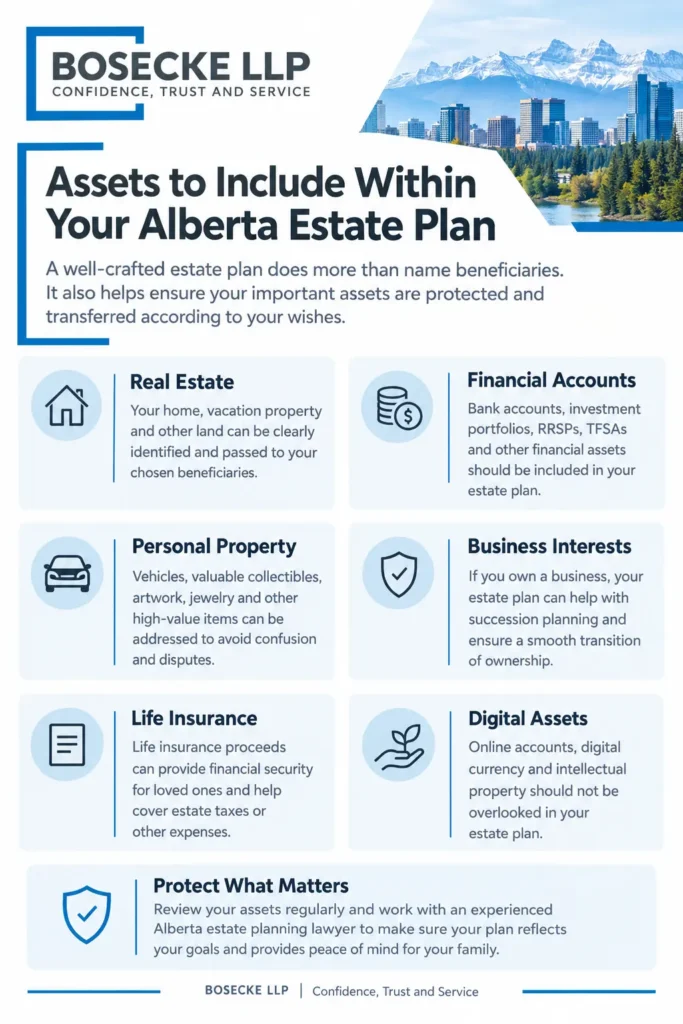
The foundation of any good estate plan is a clear understanding of what you own and what you owe. Your first step should be to create a comprehensive list of all your assets. This includes real estate properties, bank accounts, investment portfolios, retirement accounts (like RRSPs and TFSAs), vehicles, business interests, and valuable personal property.
Equally important is taking stock of your liabilities. List out your mortgages, lines of credit, credit card debts, and any personal loans. You should also make a note of digital assets, such as online accounts and digital currencies. Keeping this inventory updated and stored in a secure place will make the job of your executor significantly easier when the time comes.
2. Draft a Legally Valid Will
Your Last Will and Testament is the centerpiece of your estate plan. Governed by Alberta’s Wills and Succession Act, a will is a legal document that dictates exactly how your assets will be distributed upon your death. Without a will, you die “intestate,” meaning the Alberta government will use a standardized legal formula to distribute your property, which may not align with your actual wishes.
A proper will allows you to leave specific gifts to family members, friends, or charities. It also enables you to set up trusts for beneficiaries who might not be ready to handle a large inheritance, such as young adults or family members with special needs.
3. Select a Reliable Executor
Also known in Alberta as a Personal Representative, your executor is the person you name in your will to carry out your final wishes. This is a demanding role that involves applying for probate, paying your final taxes and debts, securing your property, and distributing your assets to your beneficiaries.
When choosing an executor, you should look for someone who is organized, financially responsible, and capable of handling stress. Many people choose a spouse, an adult child, or a trusted friend. It is highly recommended to name at least one alternate executor in case your primary choice is unable or unwilling to take on the responsibility when the time comes.
4. Establish an Enduring Power of Attorney
A will only takes effect after you pass away. But what happens if you suffer a severe injury, illness, or cognitive decline and are still living but unable to manage your own finances? In Alberta, an Enduring Power of Attorney (EPA) solves this problem.
This document allows you to appoint a trusted individual (your “attorney”) to manage your financial and legal affairs while you are alive but incapacitated. They can pay your bills, manage your investments, and even sell property on your behalf to pay for your care. Without an EPA, your family would have to apply to the court for a trusteeship order, which is a lengthy, expensive, and stressful process.
5. Prepare a Personal Directive
While a Power of Attorney handles your money, a Personal Directive pertains to your body and your life. Often referred to as a “living will” in other jurisdictions, an Alberta Personal Directive allows you to appoint an “agent” to make non-financial, personal, and healthcare decisions for you if you lose the capacity to do so.
Through this document, you can leave specific instructions regarding medical treatments, where you would like to live (such as long-term care facilities), and end-of-life care preferences. Having a Personal Directive in place removes the burden from your family members, ensuring they don’t have to guess what you would have wanted during a medical crisis.
6. Designate Beneficiaries for Registered Accounts
Not all of your assets need to pass through your will. In Canada, certain registered accounts and policies, such as RRSPs, RRIFs, TFSAs, and life insurance policies, allow you to name a direct beneficiary.
When you pass away, the funds in these accounts go directly to the named beneficiary, completely bypassing your estate and the probate process. This means the money is accessible much faster and is protected from the estate’s creditors. Review your accounts to ensure your beneficiary designations are up to date, especially after major life events like marriage or divorce.
7. Plan for Minor Children and Dependents
If you have minor children, your estate plan is the only way to officially nominate a guardian for them in the event both parents pass away. Without naming a guardian in your will, the courts will decide who raises your children, which may result in family disputes.
Additionally, you should plan for the financial support of your dependents. You can set up testamentary trusts within your will to hold their inheritance until they reach an appropriate age, appointing a trustee to manage the funds for their education, health, and general welfare in the meantime.
Protect Your Family’s Future with the Estate Planning Lawyers at Bosecke LLP

Estate planning is not a do-it-yourself project. A single mistake, ambiguous sentence, or improper witness signature can invalidate your documents, leaving your family to deal with the fallout. To ensure your estate plan is legally sound, tax-efficient, and perfectly tailored to your family’s unique situation, you need experienced legal counsel.
At Bosecke LLP, our dedicated estate planning lawyers have decades of experience helping Alberta families protect their legacies. We will work closely with you to draft clear, comprehensive wills, Enduring Powers of Attorney, and Personal Directives that stand up to legal scrutiny.
Don’t leave your family’s future to chance. Contact Bosecke LLP today to schedule your estate planning consultation and secure your peace of mind.
Frequently Asked Questions About Estate Planning in Alberta
What happens if I die without a will in Alberta?
If you die without a will (intestate), your estate will be divided according to the rules set out in Alberta’s Wills and Succession Act. Generally, your entire estate will go to your spouse or Adult Interdependent Partner (AIP). If you have children from a previous relationship, the estate is divided between your spouse/AIP and those children. If you have no spouse or children, the law dictates a strict hierarchy of relatives who will inherit.
Are “DIY” or online will kits legally valid in Alberta?
While you can use online kits, they carry significant risks. Alberta law requires strict formalities for a will to be valid (such as specific witnessing rules). DIY kits often fail to account for complex family dynamics, tax implications, or legal nuances in Alberta. A lawyer ensures your will is not only valid but structured to avoid future litigation.
What is an Adult Interdependent Partner (AIP)?
In Alberta, the term Adult Interdependent Partner is used instead of “common-law spouse.” You are considered an AIP if you have lived with someone in a relationship of interdependence for at least three years, or of some permanence if there is a child of the relationship, or if you have signed an Adult Interdependent Partner agreement. AIPs have significant rights under Alberta estate law.
How often should I update my estate plan?
You should review your estate plan every three to five years. However, you should update it immediately following any major life event. This includes getting married, becoming an AIP, getting divorced, the birth or adoption of a child, the death of a beneficiary or executor, or a significant change in your financial situation.
Does marriage or divorce cancel an existing will in Alberta?
Under the current Wills and Succession Act, getting married or entering an AIP relationship does not automatically revoke an existing will. However, if you get divorced, any gift left to your former spouse in your will is generally revoked, and they are treated as if they had predeceased you (unless the will explicitly states otherwise).
Is there a “probate tax” or “death tax” in Alberta?
No, Canada does not have an estate tax or inheritance tax. Alberta has some of the most favorable probate fees in the country. Unlike other provinces that charge a percentage of the estate’s value, Alberta caps its court filing fees for a Grant of Probate at $525, regardless of how large the estate is. (Note: Your estate will still have to pay capital gains and income tax on your final tax return).
Can I disinherit a spouse or child in my will?
While Alberta generally respects testamentary freedom (your right to leave your assets to whomever you choose), there are limits. Under the family maintenance and support provisions of the Wills and Succession Act, you have a legal obligation to adequately provide for your spouse, AIP, minor children, and adult children who are unable to earn a livelihood due to disability. If you disinherit them, they can challenge your will in court.