
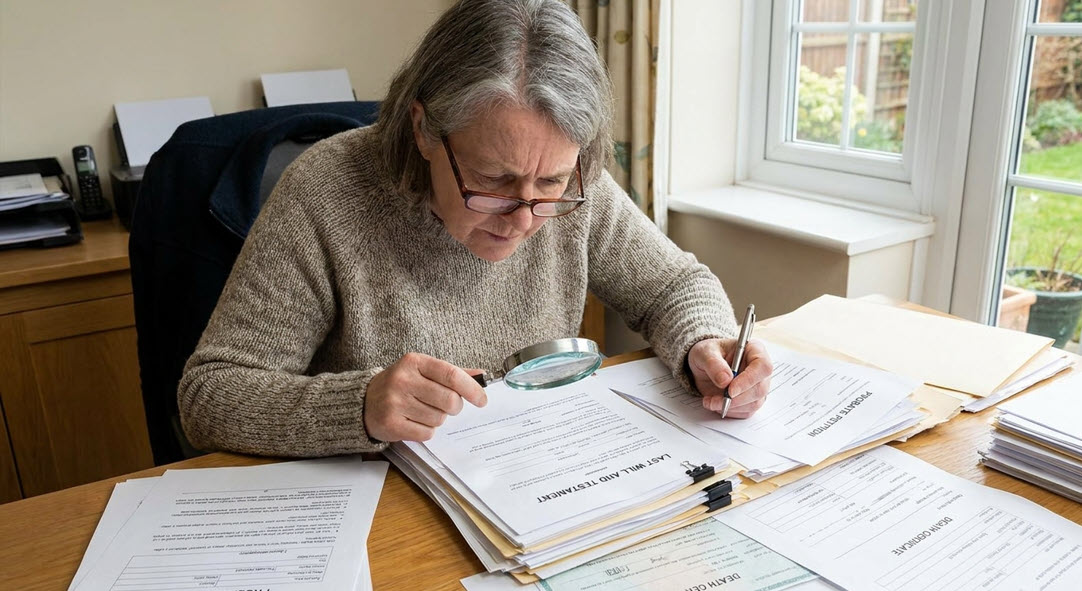
Navigating the probate process in Alberta can feel overwhelming, especially while grieving the loss of a loved one. As the named Personal Representative (executor), you are tasked with securing the estate, navigating the legal system, and ensuring the deceased’s final wishes are honored. To ensure you fulfill your legal fiduciary duties and avoid personal liability, this step-by-step guide from our experienced probate lawyers explains how to file probate in Alberta.
Step 1: Determine If a Grant of Probate Is Actually Required
Before filling out any legal paperwork, you must verify if probate is strictly necessary. Probate is generally only required if the deceased owned real estate solely in their own name, or if they held solely owned bank accounts or investments that exceed the specific financial institution’s internal threshold (typically between $25,000 and $50,000).
If all of the deceased’s assets were held in joint tenancy (such as a joint bank account or a jointly owned marital home) or had designated beneficiaries (such as life insurance policies, RRSPs, or TFSAs), the assets bypass the estate entirely. In these cases, you may only need a death certificate to transfer the assets, and you can skip the probate process altogether.
Step 2: Secure the Original Will and Death Certificate
If probate is required, your first task is to locate the deceased’s original, wet-ink signed Last Will and Testament. A photocopy is generally not accepted by the court unless you can prove the original was lost or destroyed under very specific circumstances, which requires a separate, complex legal application.
You will also need to obtain several original death certificates from the funeral home or Alberta Vital Statistics, as you will need to provide these to the court, banks, and the Canada Revenue Agency (CRA).
Step 3: Identify and Value the Estate (Form GA2)
As the executor, you must identify, secure, and value all of the deceased’s assets and liabilities as of the exact date of their death. This means writing to banks for date-of-death balances, getting real estate appraised, and tracking down credit card debts and mortgages.
You will compile this information into Form GA2 (Inventory). Under Alberta’s modernized rules, you must list all assets the deceased owned both inside and outside of Alberta. You must also account for any assets the deceased owned jointly with someone other than their spouse or adult interdependent partner.
Step 4: Complete the Primary Grant Application Forms
Once you have a clear picture of the estate, you must prepare the core legal application. The Alberta government provides these fillable PDF forms online, but they are highly technical.
- Form GA1 (Grant Application)
This is the master document. It outlines the details of the deceased, your information as the applicant, the value of the estate, and a comprehensive list of every person who requires formal legal notification of your application.
- Form GA8 (Affidavit of Witness to a Will)
If the will was signed in front of witnesses, one of those original witnesses must swear this affidavit to confirm that the will was executed properly. If the will is entirely handwritten by the deceased, known as a holograph will, you will use Form GA9 instead.
Step 5: File the Application with the Court of King’s Bench
Once your GA1 and supporting documents are prepared and sworn before a Commissioner for Oaths or Notary Public, you must submit them to the Court of the King’s Bench.
If you file probate with the help of an estate lawyer, they will file this application electronically using the province’s Surrogate Digital Service (SDS), which drastically speeds up processing times. Self-represented individuals who reside in Alberta can also use the SDS. Or they can submit paper forms directly to the courthouse.
How Much Does It Cost to File Probate in Alberta?
- $35 for estates up to $10,000
- $135 for estates between $10,000 and $25,000
- $275 for estates between $25,000 and $125,000
- $400 for estates between $125,000 and $250,000
- $525 (maximum) for estates over $250,000
Step 6: Serve the Mandatory Legal Notices
Under the new Surrogate Rules, filing the application triggers the next critical step: transparency. You cannot receive your Grant of Probate in secret.
- You must serve Form GA3 (Notice to Beneficiaries and Other Interested Parties) alongside a copy of the GA2 Inventory to every beneficiary named in the will.
- You must also serve this notice to any family members who have the legal right to challenge the estate for family maintenance and support (such as a surviving spouse or dependent children).
- If any beneficiary is a minor (under 18) or a represented adult, you must serve Form GA4 to the Alberta Public Trustee.
Once everyone has been successfully notified, you must swear and file Form GA5 (Affidavit of Service) with the court to prove you fulfilled this duty. The court will not review your application or issue the grant until the GA5 is filed.
Step 7: Receive the Grant and Settle the Estate
A justice or court clerk will review your application. If there are no errors, the court will issue the official Grant of Probate. Within 30 days of receiving it, you must send Form GA7 (Notice of Grant Issuing) to everyone you previously notified.
With the Grant of Probate in hand, you now possess the legal authority to close the deceased’s bank accounts, sell their real estate, and liquidate assets into an estate bank account. Prioritize paying off all valid debts, funeral expenses, and final income taxes.
You will need to file the deceased’s final tax return with the CRA and wait for a Clearance Certificate. Distributing the estate before obtaining the CRA Clearance Certificate or paying creditors can make you personally liable for the deceased’s debts.
Step 8: Distribute the Assets and Close the Estate
Once you have the certificate and all liabilities are cleared, you will create a final accounting ledger showing all money that entered and left the estate. You will present this to the residuary beneficiaries, have them sign a formal Release document, and finally distribute the remaining funds in accordance with the exact terms of the will.
Book a Free Probate Filing Consultation with Bosecke LLP
Bosecke LLP’s Edmonton estate lawyers have helped thousands of Albertans file probate for their loved ones’ estates over their 30 years in the legal industry. If you have questions about the filing process or wish to have a lawyer guide you through probate filing for your loved one’s estate, schedule a free consultation today.
Answers to Your Alberta Probate Filing Questions
Do I need a lawyer to file for probate in Alberta?
While you are not legally required to hire a lawyer to act as your Personal Representative, the probate process involves highly technical legal forms, strict filing deadlines, and personal financial liability.
Even minor errors on the new GA forms can cause the court to reject your application, leading to months of delays. An estate lawyer ensures the paperwork is flawless, communicates with the court on your behalf, and guides you safely through your fiduciary duties.
How long does it take for the court to approve the application?
The timeline depends on the current backlog at the Court of King’s Bench and whether you file digitally via the Surrogate Digital Service (SDS) or via paper. Generally, if your application is perfectly drafted and uncontested, it takes between 2 and 6 months to receive the Grant of Probate after filing.
What happens if a beneficiary refuses to sign a release at the end of the process?
If a beneficiary refuses to sign the final release approving your accounting, you cannot simply withhold their inheritance indefinitely or distribute the estate regardless. You will need to formally “Pass Accounts” through the court.
This involves submitting your estate accounting to a judge for review and approval. Once the judge approves the accounts, you are legally protected and can proceed with the final distribution.
Can I get paid for my time as the executor?
Yes. In Alberta, Personal Representatives are entitled to fair and reasonable compensation for the significant time, effort, and personal liability involved in administering an estate.
If the will does not specify a set fee, compensation is typically calculated using the Suggested Fee Guidelines under Alberta’s Surrogate Rules.
What if I live outside of Alberta but am named as the executor?
You can still act as the executor if you live in another province or country. However, you will not be able to use the self-represented Surrogate Digital Service (SDS) portal, as it requires an Alberta residency.
If you live outside of Alberta, the court may require you to post an estate bond (a type of insurance) to protect the local beneficiaries and creditors, unless the will explicitly waives the bond requirement or all residuary beneficiaries consent to waive it using Form GA14.