
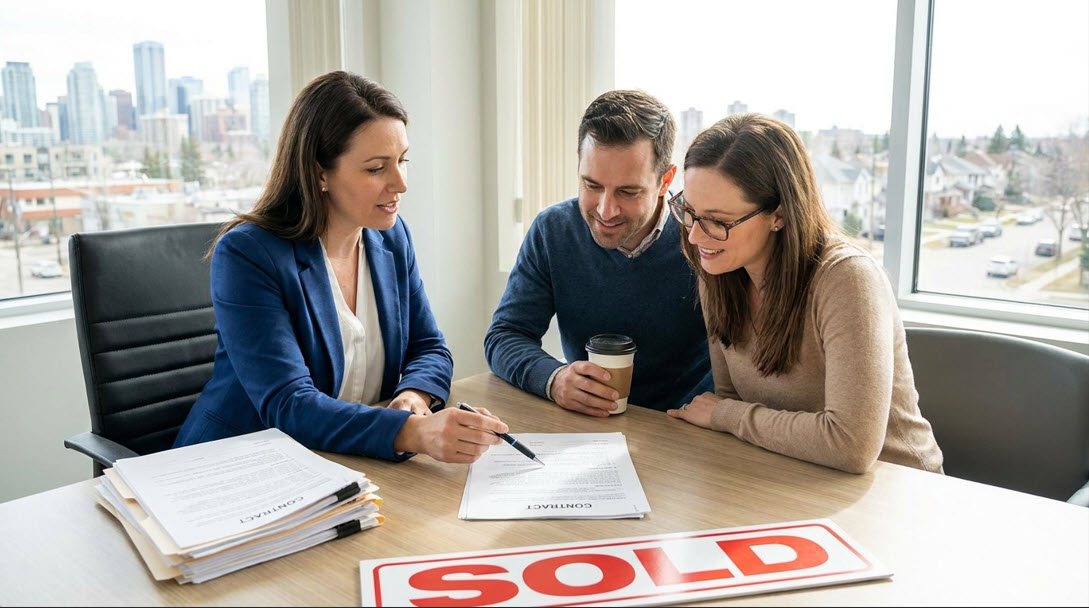
While your real estate agent helped you find the perfect property and negotiate the price, securing the transaction and finalizing the purchase requires the experience of a real estate lawyer.
In Alberta, purchasing a property is a heavily regulated legal transaction. Your lawyer acts as your transaction advocate and safeguard. They protect your interests, ensure the property is free of hidden liabilities, and guarantee that the funds are transferred securely.
This step-by-step guide explains exactly what your real estate lawyer does for you, from the moment your offer is accepted to the day you finally get your keys.
Why Your Lawyer is Your Best Asset When Buying a Home in Alberta
Real estate contracts are loaded with dense legalese. Missing a single detail can lead to costly consequences. Your real estate lawyer translates the complex terms into plain English. Their ultimate goal is simple: to make sure you get exactly what you paid for, with a clear title, and without inheriting someone else’s legal or financial baggage.
Step-by-Step: The Lawyer’s Role in Your Alberta Home Purchase
1. Contract Review and Due Diligence
Once the purchase contract is signed and your conditions (such as financing and home inspection) are waived, the document is forwarded to your lawyer.
Your lawyer will meticulously review the agreement to ensure all terms are legally binding and that your interests are fully protected. If you are buying a condominium, they will also review the Estoppel Certificate and condo bylaws to ensure the condo corporation isn’t hiding any special assessments or financial distress.
2. Conducting the Title Search
The physical home is only one element of the purchase; the transactional priority is the legal title to the house.
Your lawyer will search the Alberta Land Titles registry to verify that the seller actually has the legal right to sell the property. They will also ensure compliance with the Dower Act. In Alberta, if the property is a homestead and only one spouse is on the title, the non-titled spouse must legally consent to the sale in writing, which prevents you from facing a voidable transaction later.
Lawyers will also look for encumbrances. These are claims against the property, such as unpaid property taxes, builder’s liens, or a previous owner’s unresolved mortgage. Your lawyer ensures the seller legally clears the claims before the property is transferred into your name.
3. Evaluating the Real Property Report (RPR)
In Alberta, sellers are typically required to provide a current Real Property Report with a municipal certificate of compliance. This survey shows the exact boundaries of the property. It proves that all structures (including the house, garage, deck, or fences) comply with local zoning bylaws under the Municipal Government Act and do not cross property lines.
Your lawyer reviews the RPR to ensure you aren’t buying a property with illegal structures, encroachment issues, or boundary disputes.
4. Processing Mortgage Documents
If you are taking out a mortgage, your lawyer actually represents both you and your lender. The bank will send the mortgage instructions to your lawyer, who will prepare the legal paperwork required to register the mortgage against the property title.
Governed by regulations such as the Law of Property Act, lawyers help ensure you fully understand the terms, interest rates, and your legal obligations to the bank before you sign on the dotted line.
5. Preparing the Statement of Adjustments
You and the seller have to split certain costs based on the exact day you take possession.
For example, if the seller has already paid the property taxes for the entire year, you owe them for the portion of the year that you will own the home. The same goes for condo fees or homeowner association dues. Your lawyer calculates this “Statement of Adjustments” to determine the exact, to-the-penny amount you need to bring to closing.
6. Managing the Money and Trust Conditions
When it’s time to close, you don’t hand a briefcase of cash to the seller. You provide your down payment and closing costs to your lawyer, usually via bank draft. Your lender also sends the mortgage funds to your lawyer.
The lawyer holds this money in a highly secure trust account. On closing day, your lawyer forwards the funds to the seller’s lawyer under strict “trust conditions”, which means the seller’s lawyer cannot legally release the money to the seller until the property title is officially registered in your name.
7. Closing and Key Release
In Alberta, the standard possession time is noon on closing day. Once your lawyer has transferred the funds and the seller’s lawyer confirms receipt, keys are officially releasable. Your lawyer has officially completed the transaction, and the house is yours.
Before Finalizing Your Home Purchase, Book a Free Consultation with Bosecke LLP
Navigating a real estate transaction without a lawyer is like trying to fly a plane without a pilot—it is incredibly risky, highly stressful, and likely won’t end well. Your real estate lawyer is the final, crucial line of defense in your home-buying journey.
That’s why so many homebuyers across Edmonton turn to Bosecke, LLP. Backed by over 30 years of experience in Alberta real estate law, the firm’s lawyers are ready to help you navigate the purchase process and secure your dream home for the years to come. Schedule your free consultation with Bosecke LLP.
Answers to Frequently Asked Questions About the Lawyer’s Role in Alberta Home Purchases
Do I legally need a lawyer to buy a house in Alberta?
Yes. To officially transfer land ownership in Alberta, documents must be registered with the Alberta Land Titles Office. This process involves complex legal procedures and the handling of mortgage funds, which banks require to be processed by a licensed lawyer. Attempting to navigate this without legal representation is not permitted by lenders and is practically impossible for an individual.
When should I hire my real estate lawyer?
Ideally, you should choose a real estate lawyer before you sign the final purchase contract or remove your conditions.
At a minimum, you must retain a lawyer as soon as your real estate agent finalizes the deal and conditions are waived. Law offices typically need a few weeks to process documents, order searches, and communicate with your lender to ensure a smooth, on-time closing.
How much do real estate lawyers cost in Alberta?
Most real estate lawyers in Alberta charge a flat fee rather than an hourly rate. For a standard residential purchase, you can expect to pay between $1,000 and $2,000. This amount usually covers the lawyer’s legal fee as well as “disbursements,” which are out-of-pocket expenses the lawyer pays on your behalf (like Land Titles registration fees, title search fees, and courier charges). Always ask for a detailed, all-inclusive quote upfront.
What do I need to bring to my signing appointment?
Typically, you will meet with your lawyer about a week before possession day to sign the final paperwork. You will need to bring:
- Two pieces of valid ID (including at least one piece of government-issued photo ID).
- A bank draft for the final amount required to close (your lawyer will give you the exact figure beforehand).
- Proof of home insurance starting on your possession date. Lenders will not release mortgage funds without proof that the property is fully insured for its replacement value.
What happens if a problem is discovered during the final walk-through?
You may complete a walk-through on possession day and discover the property isn’t in the agreed-upon condition. For example, a window is broken, or an appliance that the seller agreed to leave is missing. Contact your lawyer immediately. Do this as early as possible on closing day. Your lawyer can negotiate with the seller’s lawyer to potentially hold back a portion of the funds until the issue is resolved.